

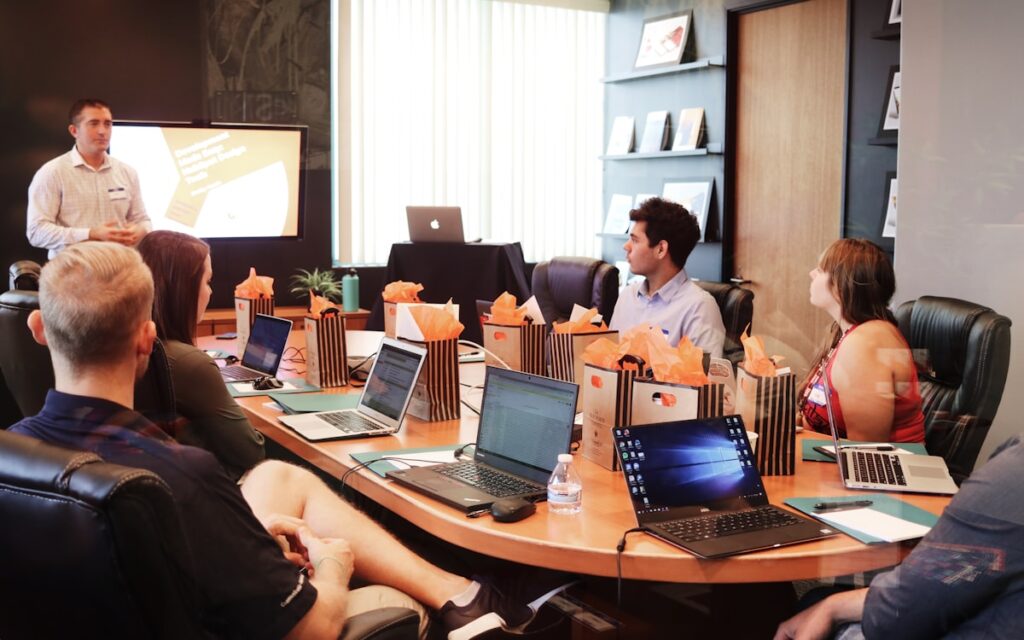
Sales training in Singapore comes in many forms, from one-day public courses to bespoke in-house programs for whole teams. If you’re weighing options for yourself or your organisation, this guide explains the types available, what separates good training from forgettable training, and how to choose a program that actually sticks.
Types of sales training in Singapore
Broadly, you’ll find public courses (open enrolment, useful for individuals), corporate or in-house training (tailored to your team and offers), B2B sales training (focused on complex, considered purchases), and sales leadership training (for those who manage sellers). Each suits a different need; the key is matching the format to your goal rather than defaulting to whatever’s advertised.
What good sales training looks like
The best sales training in Singapore has three qualities. It’s tailored to your real offers and situations, not generic slides. It’s practised, not just presented — your team rehearses and gets feedback so the skills transfer. And it’s human: built on listening and trust rather than pressure tactics that burn out both sellers and customers. Training that ignores any of these tends to evaporate within weeks.
A more human approach to selling
Old-school sales training leans on scripts, urgency and overcoming the customer. It can work once, rarely twice, and it corrodes the relationships that produce referrals and repeat business. A relational, conscious approach — listening deeply, honouring objections, letting the client reach their own yes — converts better and lasts longer. In Singapore’s relationship-driven business culture, that fit matters even more.
In-house vs public courses
Public courses are convenient and affordable for individuals, but they can’t address your specific market or offers. In-house training, designed around your team’s real situations, transfers far better because everyone practises on the work they actually do — and leaves with shared language they can use the next day. For teams, bespoke almost always outperforms generic.
How to choose
- Match format to goal. Individual skills? A course may do. Team transformation? Go bespoke.
- Insist on practice. Ask how much of the program is hands-on. Skills come from reps, not slides.
- Check the philosophy. Choose training that respects your customers; pressure tactics age badly.
- Look for reinforcement. The best providers help leaders embed the learning after the session ends.
In-house versus public courses, in depth
Both formats have a place, but they solve different problems. Public courses are convenient and affordable, and good for an individual building foundational skills — but they can’t address your specific offers, market or team dynamics. In-house training, designed around your real situations, transfers far better because everyone practises on the actual work and leaves with shared language they can use immediately. For a team, the bespoke option almost always outperforms; for a solo professional testing the waters, a public course can be a sensible start.
Making training stick
The biggest failure of sales training is that it fades within weeks. Skills learned in a workshop evaporate without reinforcement. The best programs build in practice and follow-up, and give leaders simple tools to embed the learning afterwards — coaching, role-play, and regular reinforcement in team routines. When evaluating any training, ask not just what happens in the room but what supports the change once the trainer leaves. Reinforcement is what turns a good day out into lasting capability.
Measuring the return
Good sales training should pay for itself, so it’s worth measuring. Look at conversion rates, average deal size, sales-cycle length, and — importantly — how your team feels about selling. Set a baseline before the training and track the shift afterwards. Numbers aside, watch for qualitative signs: more confident conversations, less discounting, better client relationships. Training that moves these needles is an investment; training that changes nothing is a cost.
Red flags in training providers
Be wary of providers who lean on high-pressure, manipulative techniques, promise unrealistic results, deliver generic content with no tailoring, or offer no reinforcement after the session. The best providers respect your customers, adapt to your context, emphasise practice over theory, and care whether the skills actually stick. In a relationship-driven market like Singapore, an approach built on trust rather than pressure isn’t just more ethical — it’s more effective.
Building a selling culture, not just a skillset
The most lasting benefit of great sales training is cultural. When a whole team shares clear positioning and a human-first approach to selling, the effect compounds — shorter cycles, better relationships, and people who find selling meaningful rather than distasteful. That’s bigger than any individual’s technique. Approach training as a way to build a healthy selling culture, reinforced over time, and the returns keep growing long after the workshop ends.
Choosing a partner, not just a course
The most valuable sales training isn’t a one-off event but a relationship with a partner who understands your business and helps your team improve over time. A single workshop, however good, rarely creates lasting change on its own; sustained improvement comes from tailored content, real practice, and reinforcement that embeds the skills. So when you evaluate options, look beyond the agenda to the relationship: will this provider take the time to understand your offers and market, adapt to your team, and support the change after the room empties? In a relationship-first market like Singapore, that partnership approach isn’t just nice to have — it mirrors the very way your team should be selling. Choose a partner invested in your team’s growth, not just a trainer delivering a fixed script, and the returns compound far beyond the initial engagement.
Frequently asked questions
What is the best sales training in Singapore?
The one tailored to your team’s real offers, heavy on practice, and built on a human rather than high-pressure approach.
Do you offer B2B or corporate sales training?
Yes — our workshops tailor strategy, positioning and relational selling to your team and market.
Is in-house or public sales training better?
For teams, in-house wins because it’s built around your real situations and shared language.
Our Corporate Workshops bring tailored, human-first sales training to teams across Singapore, Asia and Europe, grounded in the Conscious Sales method. Book a discovery call to design a program for your team.