

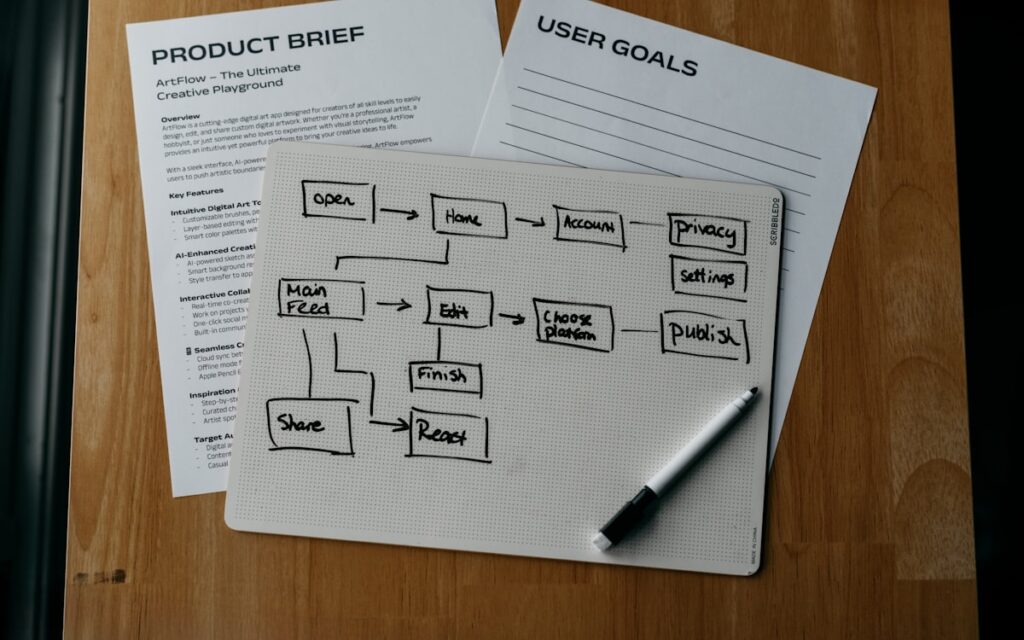
Systems — documented, repeatable ways of doing the recurring work in your business — are what let a business run smoothly, deliver consistently, and grow beyond the founder doing everything by memory. Without systems, a business stays chaotic and dependent on you; with them, it becomes scalable and reliable. Here’s how to build systems in your business for growth, turning repeated work into repeatable processes.
Why systems matter
Systems bring consistency, efficiency and scalability to a business. They ensure work gets done the same reliable way every time, save the effort of reinventing how to do recurring tasks, and make it possible to delegate and scale. Without systems, a business depends entirely on the founder’s memory and effort, staying chaotic and hard to grow. Understanding that systems are what turn a founder-dependent scramble into a scalable, reliable operation is why building them matters. Systems are the infrastructure that lets a business grow beyond the founder doing everything. They’re the foundation of scalability. See scaling your business.
Identify what to systemize
Start by identifying the recurring work that would benefit from a system — the tasks and processes you do repeatedly. Anything done regularly, that needs to be consistent, or that you’d want to delegate, is a candidate for systemizing. Focusing your systemizing effort on the recurring, important work gives the biggest payoff. Rather than trying to systemize everything at once, identify the repeated processes where a system would most improve consistency, efficiency or your ability to delegate. Knowing what to systemize first ensures your effort goes where it matters most. Systemize the recurring work that matters.
Document your processes
At the heart of a system is a documented process — a clear, written (or recorded) description of how a task is done, step by step. Documenting how you do recurring work turns it from something in your head into a repeatable process anyone can follow. This documentation is what makes work consistent and delegable. Taking the time to write down or record your key processes, clearly and usefully, is the core act of building systems. Documented processes are what transform ad hoc work into reliable systems. Get your recurring processes out of your head and onto paper. See productizing your services.
Make systems simple and usable
A system is only useful if it’s actually used, so keep your systems simple and practical. Overly complex, bureaucratic systems get ignored; clear, simple, genuinely helpful ones get followed. Aim for systems that make doing the work easier and more reliable, not systems for their own sake. Designing your processes to be simple, clear and genuinely usable ensures they actually improve how work gets done. Practical, easy-to-follow systems are the ones that stick and deliver value. Keep your systems simple and useful, so they help rather than hinder. Usable systems are the ones that actually work.
Build systems as you go
You don’t have to systemize your whole business at once. Building systems gradually — documenting a process the next time you do it, systemizing one area at a time — makes the task manageable and sustainable. Each system you build adds value, and over time they compound into a well-systemized business. Rather than a daunting all-at-once project, treat systemizing as an ongoing habit, capturing processes as you work. Building systems steadily, one at a time, is how you create a systemized business without overwhelm. Systemize gradually, and the systems accumulate. Build them piece by piece over time.
Use systems to delegate
One of the biggest benefits of systems is that they enable delegation. A documented process lets you hand work to someone else with confidence it’ll be done right, freeing you from being the only one who can do it. Systems are what make delegation reliable and scaling possible. Using your systems to delegate recurring work — so you’re not the bottleneck — is a key way they drive growth. Building systems specifically so you can hand work off well is one of the most valuable reasons to systemize. Systems make delegation work. See delegating effectively.
Improve systems over time
Systems aren’t set in stone; the best ones improve as you learn better ways to do things. Regularly reviewing and refining your processes keeps them effective and up to date. As you find improvements or circumstances change, updating your systems ensures they keep serving you well. Treating systems as living tools you continually improve, rather than fixed rules, keeps your business running better over time. Refining your systems as you learn is what turns a good system into a great one. Keep improving your processes so your systems stay effective. Living systems keep getting better.
Build a system-minded culture
As your business grows, fostering a culture that values and uses systems multiplies their benefit. When you and your team habitually document, follow and improve processes, systems become part of how the business operates rather than an afterthought. This system-minded culture keeps the business consistent, efficient and scalable as it grows. Encouraging everyone to think in terms of building and improving systems, not just doing tasks, embeds the benefits of systemizing throughout the business. Building a culture that values systems is what sustains a well-run, scalable operation over the long term. Make systems part of your culture.
Frequently asked questions
How do I build systems in my business?
Identify the recurring work worth systemizing, document each process clearly, keep systems simple and usable, build them gradually as you go, use them to delegate, and keep improving them over time.
Why are systems important for growth?
They bring consistency, efficiency and scalability — ensuring work gets done reliably, saving effort, and enabling delegation. Without systems, a business stays founder-dependent and chaotic; with them, it can scale.
What should I systemize first?
The recurring, important work — tasks you do regularly, that need to be consistent, or that you’d want to delegate. Focus your systemizing where a documented process would most improve consistency, efficiency or delegation.
Building the systems that let your business grow is exactly the kind of work we do together. Book a discovery call to turn a founder-dependent business into a scalable one.